In July, I hit my 5 year anniversary of becoming a pharmacist and on IG I put out there that I may write a post about 5 things I’ve learned in 5 years, and the response was a resounding YESS! So, here we are. While there are MANY lessons, I managed to narrow it down to these 5. If there’s any other topics you want me to write about, feel free to message me on my Instagram. I wrote this post with the pharmacy professional in mind, but I believe this can generally be applicable to any career.
It’s been a while since I wrote a post and I’m excited to be writing again! Clearly I am incapable of being succinct in blog posts, so this is a long one (once again). Let’s get into it!
5 things I have learned as a pharmacist in 5 years – in no particular order.
1 Get your Finances in Order
(disclaimer: I am not a financial advisor and this is not financial advice)
Money talk in terms of saving and spending strategies, tracking, budgeting…etc is surprisingly fun for me to learn more and more about (but it wasn’t always that way)! Having a clear picture of where our finances are is really important. For some, it can be hard to face and frankly overwhelming which is normal, but in the end facing it and taking actionable steps will help you in many ways.
“What does this have to do with career?” You may ask. Honestly, we cannot predict our lives. As much as we think or wish to be somewhere “forever” things change. I used to think of money as an after thought. However, I learned the importance of learning more about personal finances and tackling them head on and it has been a HUGE benefit. Whether we need to move geographically due to external life factors, changing jobs for internal factors, or stepping away from work for a little due to things outside of our control, life happens. When or if you may need to make a job transition, it is helpful to know where you are financially for several reasons: Based on your current lifestyle, how would your finances and the ability to support yourself (and family, if applicable) change based on the job change? If you’re moving to a higher cost of living area, would you need an increase in pay and by how much? If you needed to take a decrease in pay for a period of time in order to progress eventually, could your finances and expenses handle it in the interim? Can you go a few pay periods or a few months without pay if there came a point that you needed some time to transition to your next steps and figure things out? Do you want to work until the official retirement age or have some freedom and flexibility to retire beforehand? Those (plus more) are all the reasons why it is helpful to have a big picture view of where you are financially which makes career decisions easier when that financial burden of the unknown isn’t there.
There are also others reasons too, such as:
- Preparing for your future by saving into retirement accounts, other investment accounts, and other big life goals. Your money can work for you and your future. Pull up your employer’s benefits page, and get familiar with what they offer from retirement, other financial accounts, health insurance savings, and work perks.
- Pharmacy (or whatever career you have) isn’t the summation of your life. So, it’s nice to work towards saving for some fun goals like saving up for vacations, other wish list purchases, enjoying life responsibly, or even towards a hobby you’ve always wanted to try. To me personally, it’s important to not only have a saving strategy, but also a spending strategy to enjoy the fruits of my labor.
- People close to you and around the world are in need and to be able to give to organizations you believe in and value is an important part of life. Knowing where your finances stand helps with being able to give and be generous!
- Since some of you reading this article may have student loan debt due to the nature of our education, I know that aspect of finances can be daunting. But, a plan needs to be put into place. Log into your accounts and see what you owe and to who. Do some research, make some phone calls, and figure out how and when you want to tackle that debt in a strategic way that works for YOU and your life.
Some basic simple financial principles I try to live by include: tracking expenses, having regular money reviews (that can be every 2 weeks, every month, quarterly, twice a year…whatever works for you), having an an emergency/fall back fund, figuring out what YOU want to spend on based on what is important to YOU and your values (and your family’s, if applicable), living below my means (i.e. spending less money than what I earn), automating savings to keep consistent, avoiding the need to impulse buy or keep up with others because “I’m a pharmacist now.” Basically, save, live, and give.
Resources that may help with finances:
Book:
Seven Figure Pharmacist by Dr. Timothy Church and Dr. Timothy Ulbrich
I read this book shortly after residency and it was SO useful, I’ve flipped back to it a few times since then too. This is a great and comprehensive starting point and they also have a podcast
Websites:
Fidelity Learning Website has a lot of great resources and lessons on finances. They also have helpful articles, podcasts, and webinars, and email newsletters on various topics.
Youtube and Podcasts are also great places to look for learning and resources.
Professionals: If you would like, seek out professional help such as financial advisors, financial planners, tax professionals…etc. Check with your workplace benefits if this is something that is offered to employees at no extra cost. Often times, the financial institution that your workplace partners with for retirement savings (401k, 403b, TSP…etc) offers free services.
The more you expose yourself to information on personal finance, the more comfortable you’ll be navigating the world of your personal finances.
Proverbs: “A wise man thinks ahead; a fool doesn’t, and even brags about it!” (Ch 13); “The plans of the diligent lead to profit as surely as haste leads to poverty.” (Ch 21)
2 Hold your Career Expectations and Journey Loosely, it’s OK
As many of you know, I went through the process of applying to residency, did a very intense residency, learned so much clinical information, worked as a clinical pharmacist, and then made the jump to industry. If you would have told me that would be my path as a first year pharmacy student, I wouldn’t have believed you at all (neither clinical nor industry was on my radar P1 year).
All of those experiences were soo beneficial, and I wouldn’t change a thing, truly. I never really wrestled internally with holding onto a specific “type” of career—mainly because I never clung to one in the first place. I never felt totally confident or comfortable declaring, “My long-term goal is to have this position,” or telling myself, “I’m going to be doing this specialty or that job forever,” or “I have to pursue that path because I couldn’t imagine doing anything else.” For a while, I honestly thought that made me seem “directionless”—just because I was always open to all the different directions life could take me and couldn’t pinpoint exactly where I wanted to end up long term. I genuinely admire people who land in a role early on and just know the path from there—they’re clear, focused, and that’s amazing! There’s absolutely nothing wrong with that—because when you know, you know! But for me personally, I learned, I’ve just never been wired that way and that it is OK!! I’ve always kept my mind open to the idea that there are paths and possibilities out there that I haven’t even imagined yet—jobs and positions I don’t even know exist.
In my PGY-1 residency, there were a few specialties I was very very interested in. I decided not to pursue a PGY-2 for various reasons and went through the process of getting a job post-PGY1. When I became an actual independent clinical pharmacist, I was able to work in those specialties I was interested in as a PGY-1 and found that it was a different experience doing it as an independent pharmacist vs as a resident and I actually started gravitating toward other specialties that I found really interesting. I didn’t hold on tight to what I thought I wanted in residency, but rather left room to explore other areas and that served me well and was beneficial to not only me, but my department, and of course patients.
I encourage you to yes, be focused, have a great work ethic, and to work hard and smart, but also keep an open mind, you never know where life may bring you. You may not be on the trajectory that you expected to be at this point, but sometimes things take time and other times it takes a pivot. You are not behind, there’s no one to catch up to.
Proverbs: We can make our plans, but the LORD determines our steps (Ch 16)



3 You don’t know it all
I think this is pretty much self explanatory. Regardless if you’re fresh out of school or have 20 years of experience, there are things we simply don’t know. I’ve had to learn the hard way that thinking I already knew the answer instead of digging deeper and asking more questions is definitely not the move. I have had to learn to approach situations with a humble attitude, and get good at asking probing questions to clarify what I need to do or what someone else is trying to ask – there always seems to be a question behind the question. It’s okay to not know things right away and have to look it up. Not having the answer right away is okay. It is more wise to take time and get the right answer than to rush and assume and give the wrong answer or do the wrong thing. Also, know that people do things differently and have different thoughts and processes, but that does not always mean it is wrong, it is just different. Lastly, as a side something I want to add here is that learning how to deal with and navigate difficult people is a true skill to learn and will benefit you in the long run in the workplace.
PRO-TIP: get to know the policies, guides, and processes at your workplace. It’ll help so much in learning, doing things the right way, and keeping things standard across your department.
4 Understand that you will not enjoy your job all the time – some days are hard
I could write a book on this topic. While having a positive outlook on life in general is great, the hard days, the days where you feel unfulfilled, unsatisfied, out of your mind, and just want to complain are going to happen. Although work in itself isn’t meant to satisfy all of our needs, hopes, and dreams, it is still a significant part of our lives. A large majority of people work 40 hours per week (some of us, more than that) and that is a huge part of your time to be disenchanted, dissatisfied, and just loathe what is going on.
Knowing that there will be days, or months, or jobs like this is important to know. Every place of work will have its ups and downs. Sometimes it’s a temporary dip in satisfaction. Some temporary examples that come to mind are a place of employment that is temporarily understaffed, going through leadership changes, or if your just gaining experience to get to the next step – we may be able to tolerate those scenarios for a temporary amount of time. If it is a scenario where there is deep satisfaction beyond repair, sit with yourself, think through why that is and what you would change about your work, workplace etc…if you could. Assess if there are things that actually can be changed. For instance, if you work in a hospital or retail pharmacy, you might consider requesting a change in your schedule or hours. The hours that once worked well when you were fresh out of school or residency may no longer suit your current lifestyle. If that’s the case, it’s always worth trying to speak with your employer and explore possible adjustments. It’s also important to consider that workplace dissatisfaction may stem from a mismatch between our high (and unmet) expectations of what work should be like and the reality of what work really is—or from holding on too tightly to our jobs because our sense of identity is closely tied to them (see lesson #5 for some help with this).
If there are changes that can’t be made or the changes still have you feeling this sense of “I just can’t do this anymore” then make a plan, do some research, reach out to people, figure out or dream up what would be ideal for you, what you like, what you don’t like, and figure out what path of pharmacy (or whatever field) you would like to get to and make an exit plan/strategy. Understand the skills you will need for the job you want and use your current job to acquire those skills to start the process of moving onto the next chapter (lesson #1 also helps with this). PRO-TIP: begin to look at job descriptions of jobs you eventually would like and figure out what skills you can acquire at your current job to get there – think “transferable skills.”
To wrap this point up, understand also that every job and career has its pros and cons, you just need to know what is valuable to YOU (for example, co-workers vs. work culture vs. pay vs. schedule…etc). Know that each job, situation, and day, is shaping you into the person you will become, so take in the lessons as you grow to the next chapter
PRO-TIP: don’t be the complainer at work. Just don’t be that person, even though it can be soo tempting. Give constructive feedback to the appropriate people, try to look at things from a different angle, and seek to understand.
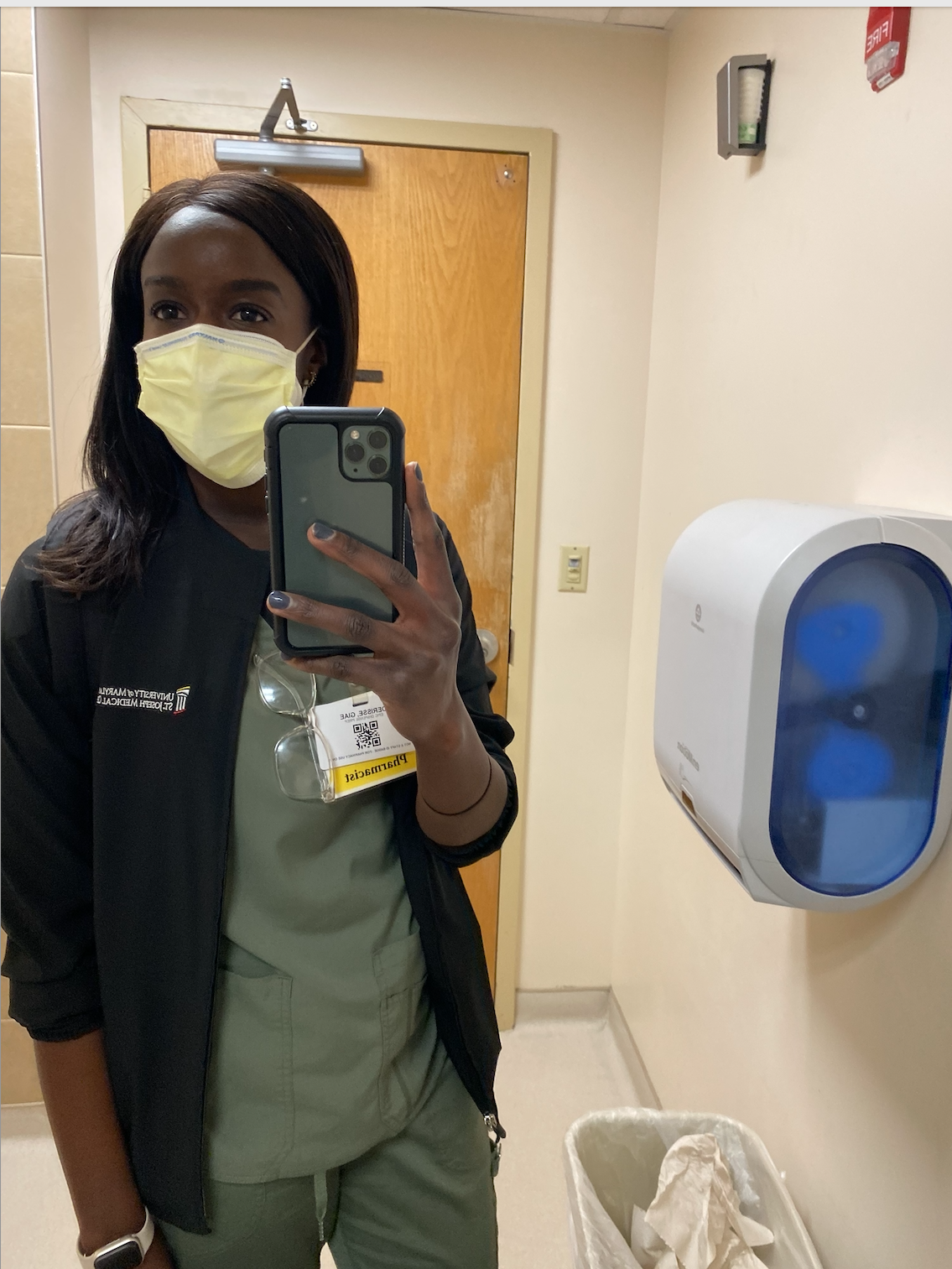


5 Your job is only one aspect of your life
Life is made up of many areas: family, friends, hobbies, health, finances, development, adventures, work/career…etc. Your job is one aspect of your life. It is a piece of the pie, but not the entire pie. Are there times in life where your career feels like 80% of the pie (i.e. residency)? Yes. But that isn’t the norm. Are there busier “seasons” of work, yes. But that isn’t the norm (keep in mind this blog post is mainly for ‘typical’ pharmacy professional audience).
Adjusting to “normal” work hours after residency was interesting and I really had to work and learn at what this new life would look like (i.e. not working 70-80 hours a week anymore) and how I wanted it to look and what I could spend my time on outside of work. There truly is a mindset shift that has to happen from school, to training, and through your jobs. If you follow along on my Instagram, you see the many adventures I go on, the many hobbies I have tried and let go of, and the things I have stuck to. It is important to enjoy your time after work and to enjoy your weekends as well. I had to figure out ways to free up my time on the weekend so that it wasn’t always spent only on chores and errands. I had to start and integrate those chores and errands into the week. For example, instead of laundry taking up hours and hours on the weekend, pick a day or two during the week to do it. Instead of using your entire Sunday to grocery shop, meal prep, deep clean etc. try to grocery shop on your way home from work one of the days (you’re already out and dressed, so why not?). Sprinkle those returns, random errands, and chores throughout the week if you can and if you want to. This way your weekend can be freed up a little more and your time after work will be a mix of using your time wisely with “adulting” tasks, doing what you enjoy, and simply resting. Your time is PRECIOUS. Your life is PRECIOUS. There should be time for enjoyment, rest, and re-filling. Continue to strengthen and grow your friendships and other relationships. Enjoy and be present for those in your life that you love and make time to give your time to others in need, after all – life isn’t only about ourselves.
Your career trajectory and career goals is just one part of this beautiful life we get to live. Is work important? Of course, yes. But it is not everything. You know your priorities in life, so live accordingly.
Bonus lesson (because I can go on and on, haha):
Lesson #6 (last, but certainty not least): Trust God with your career.
I know not everyone reading this is a Christian, but some are. Listen. God cares about every single detail of your life, from the seemingly small to the obviously big. He cares about your work, how you work, and where you work. Most times, work isn’t only to satisfy our needs, desires, and dreams, but part of a bigger plan that He has in order to accomplish the purpose He has for our lives. Trust Him with your career and His timing. Sometimes He will have you in a place longer than you want and it can feel utterly chaotic, but lean into Him and deepen your dependence on God. You are learning and growing through all seasons of life. You are laying a foundation that no one can else will have. I could tell you story after story about how God has shown up for me in my schooling, in residency, in clinical pharmacy, and now in industry so I speak first hand of the goodness of God through the ups and downs and all the spiritual lessons I have learned because I will be the first to say I have NOT been perfect. Leave your plans to Him and be obedient even when it does not make sense. Humble yourself, think of others as greater than yourself, don’t only consider yourself, but also others. We don’t know what tomorrow holds, or what the future holds, but He knows. I know His ways are not our ways, so daily, choose to trust in Him whether your 5 months in, 5 years in, or 50 years in. Blessings and peace to you.
Now listen, you who say, “Today or tomorrow we will go to this or that city, spend a year there, carry on business and make money.” Why, you do not even know what will happen tomorrow. What is your life? You are a mist that appears for a little while and then vanishes. Instead, you ought to say, “If it is the Lord’s will, we will live and do this or that.” James 4
And we know that God causes everything to work together for the good of those who love God and are called according to his purpose for them. Romans 8:28
—
I’d love to know what you thought of this post, let me know on Instagram or in the comments!
If there are other topics you’d like me to cover, please feel free to let me know on my Instagram and check out my other posts on there about career things.



When I link to products, some of those links may be affiliate links. If you click on any of those links and make a purchase within a certain amount of time, I’ll earn a small commission – this commission is paid by the retailer to me at NO cost to you. As an Amazon Associate, I earn from qualifying purchases